

Is a cold-climate heat pump worth it in Nevada

One request ends the search for a heat pump installer.

Hand it over

A cold-climate heat pump is usually not worth the extra cost in Nevada. That technology is built to keep pulling heat out of air that is well below freezing, for homes where the furnace alternative means burning a lot of expensive fuel all winter. Most homes here heat with gas, and gas is the cheaper way to cover the handful of cold months you get. Where a cold-climate heat pump earns its keep is in the opposite job: your summers, which run hot and dry for a long stretch. A standard heat pump already handles that heat and the mild winter cold here without trouble. If yours is struggling to keep up, the fix is more likely a unit that is undersized, low on refrigerant, or simply getting old, not a case for upgrading to cold-climate equipment you may never need the way it was designed to be used.

A gray outdoor condenser unit on a concrete pad beside a beige vinyl-sided house, with a wall-mounted disconnect box, flexible conduit, mulch bed, shrubs and a concrete walkway in front.

A heat pump running as it should

This is what a working unit looks like: clean grille, clear space around it, lines running straight to the wall. In Nevada it should be handling most of your cooling load without strain, since winters here rarely push it hard.


A weathered gray outdoor condenser unit on a concrete pad beside a house with horizontal vinyl siding, with conduit, refrigerant lines, and an electrical disconnect box on the wall behind it.

A heat pump that's falling behind

Dust caked on the grille, leaves piled at the base, years of buildup on the top panel. A unit in this shape is working harder to move the same air, and in a Nevada summer that shows up fast on the power bill.

A closed silver laptop and a glazed ceramic mug on a wooden table, with a blurred kitchen counter, potted plant, cutting board and window in the background.

What this means for your house

Your gas furnace already handles the cold nights, and Nevada winters don't ask much of it. The part of the year that works your heat pump hardest is summer, running the AC side day after day against dry, triple-digit heat. A cold-climate heat pump is built for the opposite problem: pulling warmth out of frozen air. Paying more for that capability doesn't change how your system performs in July, and it doesn't lower what you pay power here, which is already cheap compared to most places.

If your heat pump is struggling, the fix is almost always something ordinary: a dirty coil, a low charge, a capacitor giving out under summer load. Figuring out which one means finding a licensed contractor, explaining the system you have, and getting a quote you can trust before you let anyone touch it. Send the form once and that search is done. You're not left calling around and repeating the same description of your unit to the next name on the list.

Interior corner of a dining room with a round wooden table, a ceramic vase holding olive branches, a dark spindle-back chair near a curtained window, and a sideboard with a lamp against beige walls.
A gray outdoor condenser unit on a concrete pad beside a house with stacked stone and horizontal siding, surrounded by gray gravel and a plain light wall.

Where the cost difference shows up

A cold-climate heat pump earns its price with a compressor built to ramp up output as the outside air gets colder, down well below zero. That part costs more to build and more to install. Nevada nights rarely ask a compressor to work that hard. Las Vegas averages lows in the 30s even in December and January, and Reno's cold snaps are short. The extra capacity sits unused most winters here.

A dark gray outdoor heat pump unit sits on a concrete pad beside a white stucco wall and lap-sided house corner, with mulch and a small shrub in the foreground.

What your furnace is already doing

Gas furnaces fire at a fixed rate and don't lose capacity as it gets colder outside, which is the opposite of how a heat pump behaves. That's why a standard heat pump paired with a gas furnace works fine in Nevada. The furnace takes over on the handful of nights a standard heat pump would struggle, and those nights are few enough that a cold-climate compressor never gets asked to prove itself.

Why does your heat pump struggle in July, not January

You'd notice it on the hottest afternoons. The unit runs long stretches without shutting off, the air coming out of the vents feels less cold than it should, and the house takes longer to come back down once the sun's been on it all day. That's the compressor working against dry, triple-digit heat, not against a cold snap. Your gas furnace already covers the nights that dip below freezing, so the heat pump's winter side barely gets tested here. If it's struggling, the cause is almost always a dirty coil, low refrigerant, or a unit sized for a smaller house, not a lack of cold-climate parts. Paying for a compressor built to chase heat out of sub-zero air buys you nothing for the problem you're actually having.

A man in a navy sweater reclines with closed eyes in a beige armchair in a living room, with a lamp, wooden cabinet, bookshelf, potted plant, and a side table holding a newspaper and mug nearby.
A man in a blue henley shirt reclines on a leather chair with his eyes closed, beside a window, a houseplant, a side table with a newspaper and a dark mug.
A man in a gray sweatshirt reclines with his eyes closed in a dark leather chair, with a bookshelf behind him and a side table holding folded newspapers, a mug, and a potted plant by a window.
A man in a blue sweater leans back on a brown leather chair with his eyes closed and a slight smile, in a room with bookshelves, framed pictures, a potted plant by a window, a folded newspaper and a dark mug on a table.

One request and it's handed off

If your heat pump is struggling to keep up with a Nevada summer, the fix has nothing to do with cold-climate ratings built for sub-zero air. What matters is whether the unit you have is sized right, charged right, and running the way it should on the afternoons that actually push it. That's a job for someone who installs these systems here and knows what a unit working against dry, triple-digit heat is supposed to look like. Finding that person usually means searching around, calling a few contractors, explaining the same problem more than once, then sitting with quotes trying to tell them apart. Send this request instead and that work is off your plate. You still have a house to cool through the rest of summer and a furnace that'll carry you through a mild winter. Getting the install looked at now, before the next heat wave, is worth more than chasing a spec built for weather you don't get here.

A gray outdoor condenser unit on a concrete pad beside a house with horizontal lap siding, a conduit and disconnect box on the wall, a shrub with white flowers at right and evergreen foliage at left.

Clean and clear

This is a heat pump with nothing in its way. The coil fins are clean, the grille is open, and the lines run straight to the wall with room to breathe on every side. Airflow like this is what lets the unit move heat in or out the way it was built to.

An outdoor air conditioning condenser unit with a top fan grille sits on a concrete pad beside a house with horizontal siding and a concrete step.

Choked with dust

Here the fins are dark with dust and debris, and the grille is caked over. Air can't move through a coil like that the way it needs to, so the unit works harder for less cooling. A yearly cleaning catches this before a July afternoon turns into a service call.

An outdoor air conditioner condenser unit on a concrete pad beside a house with horizontal lap siding, with a shrub to the left, bare dirt in front, and conduit and a metal disconnect box on the wall.
Before you get your heat pump installation
A beige outdoor air conditioning condenser unit on a concrete pad beside a house with horizontal vinyl siding, with refrigerant lines and a disconnect box on the wall, surrounded by dark mulch and a green shrub at left.
After you get your heat pump installation
  1. Outdoor air moves across the coil, giving up heat to the refrigerant inside.

  2. The compressor squeezes that refrigerant, raising its temperature further.

  3. Hot refrigerant runs through the indoor coil and the air handler blows warm air through your ducts.

  4. The reversing valve flips the cycle, and in summer the same system pulls heat out of your house instead.

Power costs 13.26 cents per kilowatt-hour statewide

At 13.26 cents a kilowatt-hour, running your heat pump hard on July and August afternoons shows up on the bill, but it's still cheaper than what that same electricity would cost in most other states. A cold-climate compressor built for sub-zero air doesn't change what you pay to cool your house in a Nevada summer.

EIA-861 2025 statewide residential average

An outdoor condenser unit on a concrete pad beside a gray lap-sided house, with an electrical disconnect box and conduit on the wall and shrubs with mulch to the right.
A heat pump with clear space around it and lines running straight to the wall cools the way it should on a dry, triple-digit afternoon.
An outdoor air conditioning condenser unit on a concrete pad beside a house with horizontal siding above a brick foundation, with a flexible conduit running to a wall-mounted disconnect box.
Dust built up on the coil and a unit crowded against the wall make it work harder than a Nevada summer should ask of it.
A gray-haired man with a beard in a blue button-placket shirt reclines on a couch with his eyes closed, beside a sunlit window with a green plant.
A woman in a cream knit sweater sits in an armchair with her eyes closed near a window showing yellow autumn foliage, with a mug on a round wooden side table beside her.

What this comes down to

  • A cold-climate heat pump is built for sub-zero air, and Nevada's gas-heated winters never ask that of a compressor.
  • The summer heat is what actually works your system, and that load has nothing to do with cold-climate ratings.
  • Sizing, charge, and airflow decide how your heat pump handles a 105 degree afternoon, not a spec built for Montana winters.
  • Dust on the coil and a unit crowded against the wall cost you more performance than a cold-climate upgrade would ever give back.
  • At 13.26 cents a kilowatt-hour, the fix worth paying for is a system that runs clean and clear, not one rated for cold it will never see.
  • The right call is matching the unit to your house and your summer, not to a climate Nevada doesn't have.

You already have a heat pump, and the question was never whether it works. It's whether paying more for a cold-climate compressor makes sense in a state that heats with gas and rarely sees a hard freeze. It doesn't. Your winters don't ask for sub-zero performance, so that part of the upgrade sits unused while you pay for it anyway. What actually decides how your afternoons go in July and August is simpler: the right size for your house, the correct refrigerant charge, a clean coil, and clear space around the outdoor unit so it can move air the way it needs to. None of that comes from a cold-climate rating. All of it comes from the install itself. At 13.26 cents a kilowatt-hour, a system that runs clean costs you less all summer than one working harder than it should because of dust, crowding, or a charge that's off.

If your heat pump isn't handling a 105 degree afternoon, that's worth sorting out, and the fix is specific to your unit and your house, not a spec sheet built for Montana. Finding a contractor who can look at sizing, charge, and airflow usually means searching, calling around, explaining the same problem more than once, then sorting through quotes that aren't easy to compare. Sending the form here replaces that legwork. Once it's in, the search for someone qualified stops being something you have to manage yourself.

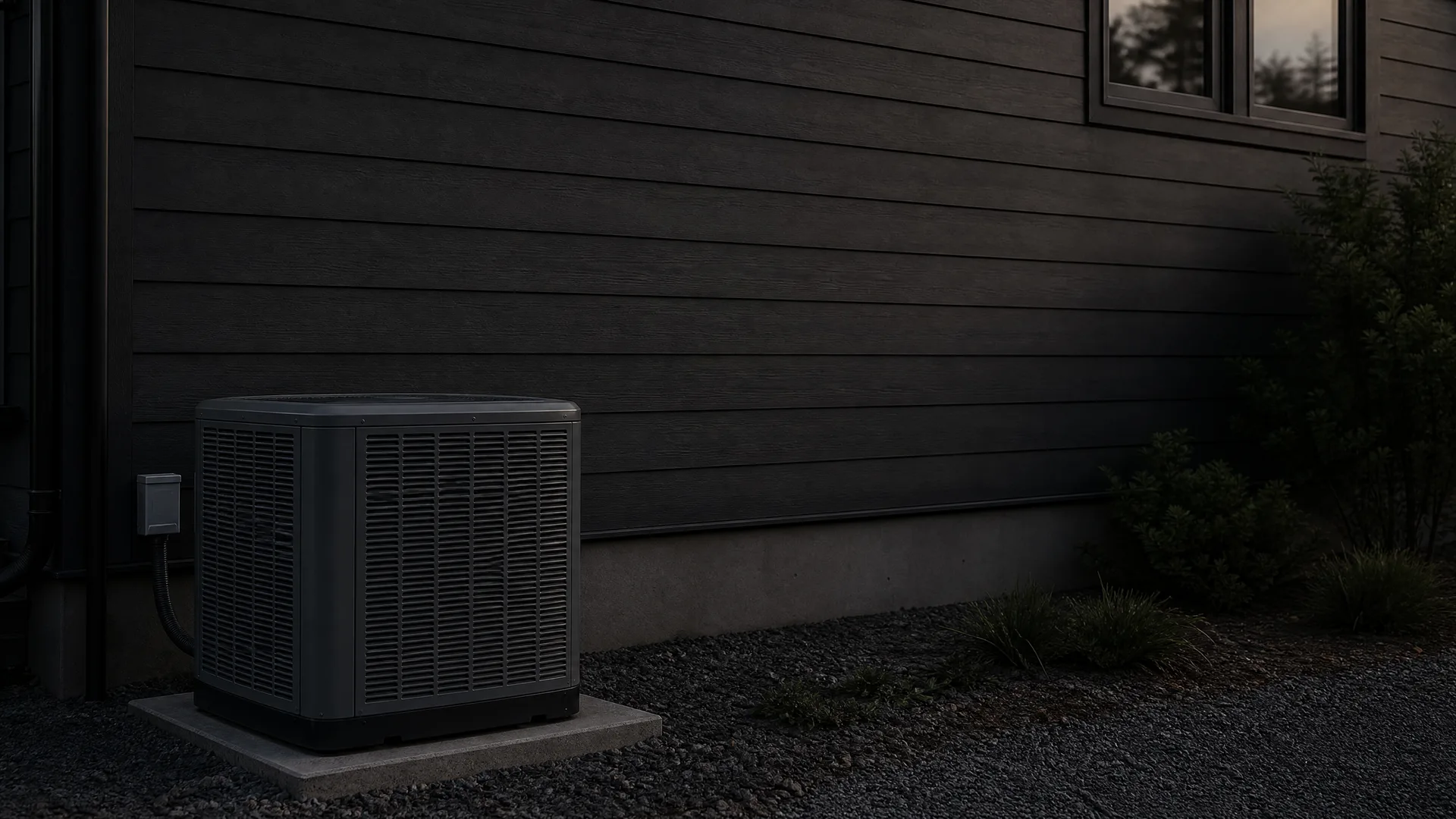
An outdoor condenser unit on a concrete pad beside a dark horizontal-lap-sided house, with gravel, shrubs and a small electrical disconnect box on the wall, in dim light.

Done looking for a heat pump pro

Explain the job once and skip repeating it on every call.

Step 1 of 3: Equipment