




Profile view of a bearded man wearing a dark baseball cap and a dark gray T-shirt against a plain off-white background.

Why your heat pump won't turn on in Nevada

Step 1 of 3: Equipment

A heat pump that won't turn on usually comes down to power not reaching it or the thermostat not calling for it. Check the breaker first. Heat pumps sit on a dedicated circuit, and a tripped breaker or a blown fuse at the outdoor unit will shut the whole system down with no warning at the thermostat. Next check the thermostat itself. Dead batteries or a setting left on the wrong mode will stop a call for cooling cold, and in your part of Nevada that call runs for months at a stretch over summer, so the system gets worked hard and a worn thermostat or a loose wire at it fails more often than people expect. If the breaker is fine and the thermostat is calling but the outdoor unit still won't start, the problem is likely inside the unit itself, in the capacitor, the contactor, or the control board, and that's work for someone who can test it safely.

A weathered outdoor condenser unit on a concrete pad beside a house with white horizontal vinyl siding, with refrigerant lines and conduit running to a wall-mounted electrical box.
Before you get your heat pump repair
A gray outdoor heat pump unit with a large fan grille sits on a concrete pad beside a house with horizontal lap siding, next to a green shrub, mulch bed, and lawn.
After you get your heat pump repair

A heat pump won't start on its own. The thermostat has to send a low-voltage signal to a contactor out at the condenser, and if that contactor has failed, the signal never reaches anything. Power has to be present at both ends of the system too, the indoor air handler and the outdoor unit, so one side can look fine while the other is dead. The outdoor unit also carries a defrost board that manages the switch between heating and cooling, and when that board fails the whole system can lock out rather than just losing one function. A weak capacitor causes the same kind of silence. Power gets to the unit, but the compressor or fan motor never gets the jolt they need to start turning. Refrigerant that's run low can trigger a pressure switch, which shuts things down on purpose before a part gets damaged. Newer units add another layer: a short diagnostic check at startup, and a single sensor fault, even one that has nothing to do with the real problem, can keep the whole system from firing.

What's Actually Stopping It

  • The thermostat sends a low-voltage signal to a contactor in the outdoor unit, and a bad contactor means the unit never gets the call.
  • A heat pump needs power at both the indoor air handler and the outdoor unit, so a breaker that's fine on one side can still be tripped on the other.
  • The outdoor unit's defrost board controls when the system switches between heating and cooling, and a failed board can lock it out entirely.
  • A capacitor that's gone weak won't give the compressor or fan motor the jolt they need to start, even when power is reaching the unit.
  • Low refrigerant can trip a pressure switch that shuts the system down as a safety measure before anything gets damaged.
  • Some units run a short diagnostic cycle on startup and will not fire if a sensor reports a fault, even one unrelated to the actual problem.
A gray outdoor condenser unit on a concrete pad beside a white horizontal-siding house, with refrigerant lines and conduit running to a wall-mounted disconnect box, bare soil in front and a green shrub at left.
The outdoor unit runs quiet, the fins clean, power and signal both getting through without a fight.
An outdoor air conditioning condenser unit on a concrete pad beside a house with light horizontal siding and a concrete block foundation, with bare soil and small green plants around it.
Caked dust on the fins blocks airflow, and a unit that can't breathe can trip out before it ever starts.
A dark bedroom at night with a rumpled duvet and pillows on a bed beside a rain-streaked, condensation-covered window with distant lights, a curtain, and a bedside lamp.

It's past ten and the house is still warm. You've got the thermostat pulled up on your phone, light from the screen the only light on in the bedroom, and the number on it hasn't moved in twenty minutes. The window's cracked but nothing's coming through it, just the dry Nevada heat sitting in the room the way it does in August. You've already gone out to the breaker box once in bare feet. You lie back on top of the sheets instead of under them, phone still in hand, running through who you'd even call about this at ten at night and whether any of them would pick up.

Explain it one time

Your request goes to one pro, not a list of companies.

Asking costs nothing, and the choice to hire stays yours.

In Nevada, power is cheap, so most of a heat pump's winter work is nowhere near the panel. The circuit board, the reversing valve, the defrost sensor: any one of those can stop the unit cold without ever tripping a breaker.

A licensed Nevada contractor who works on heat pumps all year knows which of those parts fails first and checks it before the rest, instead of guessing down the whole list.

A woman in a cream sweater with her hair in a bun laughs while seated at a stone counter holding a glass of red wine, in a dimly lit interior with a sofa, houseplants and a large window at night.
A woman with long dark hair in a cream knit sweater laughs while looking off to the side, seated in front of a dimly lit kitchen with an island, stools, open shelving and a potted plant, with a glass of red wine in the foreground.
A smiling woman with long dark wavy hair in a light knit sweater sits at a marble counter with a glass of red wine, with a dimly lit living room and kitchen in the background.
A smiling woman with long wavy brown hair in a beige sweater sits at a white marble counter with a glass of red wine, with a living room, dining table and kitchen cabinets behind her.

The breaker trips once

You reset it, the unit runs fine for a week, then it trips again on a hot afternoon. That's not a bad breaker, that's the breaker doing its job. Something downstream is pulling too much current, usually the compressor or a failing capacitor, and it's going to keep tripping until that part is replaced. Resetting it again just buys another few days before the house is warm at ten at night and you're back at the panel.


The breaker never trips

Flip the switch, check the panel, everything looks normal, and the unit still won't start. This is the harder one to chase down yourself, because the fault isn't in the wire at all. It's a thermostat that isn't sending the call, a contactor that's stuck or burnt, or a control board that's gone bad. Nothing visible tells you which. A contractor with a meter can find it in minutes; guessing at it from the thermostat settings usually can't.

A smiling bearded man in a navy crewneck sweater sits at a dinner table with a glass of red wine, plates and glasses in the foreground, in a dimly lit room with a lamp and framed picture behind him.
A woman in a dark gray sweater reclines on a light sofa with eyes closed and a slight smile, under a textured gray blanket with an open book resting on her lap, with a lit table lamp and plant in the background.

Calling around yourself

Searching for a contractor who works on heat pumps, calling a few, explaining the same problem each time, then sitting with quotes trying to guess who actually knows the equipment.

Get a licensed local pro

One call, one contractor

A licensed Nevada contractor who services heat pumps all year gets matched to your address, so you explain it once and only one company calls you back.

Get a licensed local pro

Power costs 13.26 cents per kilowatt-hour statewide

At 13.26 cents a kilowatt-hour, running your heat pump isn't what's driving your bill. So when it won't start, the fix is almost never "use it less." Something's stopping power or signal from reaching the unit, and that's worth tracking down.

EIA-861 2025 statewide residential average

Where That Leaves You

  • A dead heat pump almost always traces back to power that isn't reaching it or a thermostat signal that isn't getting through.
  • The breaker, the contactor, and the circuit board are the first places a contractor checks, in that order.
  • A unit that trips once on a hot afternoon is usually the compressor or a failing part pulling too much current, not a bad breaker.
  • Most of what stops a heat pump here has nothing to do with the cost of running it, since power in Nevada is cheap.
  • A licensed Nevada contractor who services this equipment all year already knows which of these parts tends to go first.
  • Sending the job to one local contractor means explaining the problem once instead of repeating it to several companies.

A heat pump that won't turn on is a power problem or a signal problem, and almost always one of a handful of parts: the breaker, the contactor, the circuit board, or something pulling more current than it should. None of that is about how much the unit costs to run. Power in Nevada is cheap, so a dead heat pump isn't the bill catching up with you. It's a part that failed or a connection that broke somewhere between the thermostat and the compressor.

Finding that part means someone who already knows where to look. A contractor who services heat pumps in Nevada all year has likely seen this exact unit shut down the same way before, in the same heat, for one of the same two or three reasons. That's different from calling around yourself, describing the problem to one company after another, then trying to sort out which of them actually knows this equipment from the ones just guessing.

Sending the job to one licensed local contractor skips that part. You explain what the thermostat is doing, or not doing, once. They come knowing the breaker and the contactor are the first two things to rule out, and they go from there. You're not fielding calls from three different companies trying to win the job, and you're not left piecing together three different diagnoses. One contractor, local, who's seen this unit's problem before it ever showed up at your house.

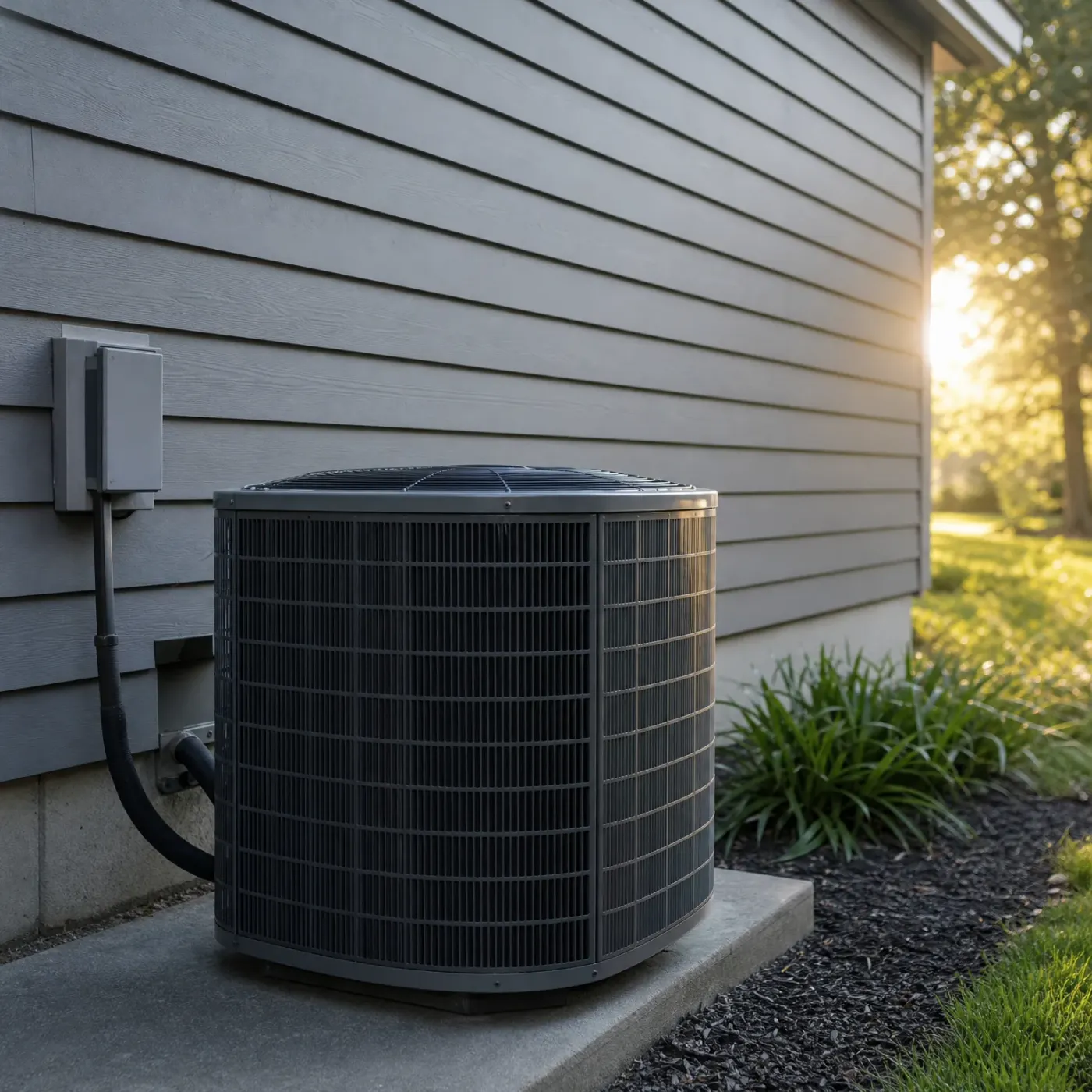
An outdoor air conditioner condenser unit on a concrete pad beside a gray horizontal-lap-sided house, with an electrical disconnect box and refrigerant line on the wall, grass, shrubs and a tree with low sun behind.

Skip calling around

Skip calling around

Only one pro gets your request, so you hear from one company.

Sending the form costs nothing.